Pages
Search

Follow me on ResearchGate

Follow me on ResearchGate

Tuesday
Oct132020

Public theologies and 'non-religious' beliefs - examples nationhood and economic systems

The South African academic system requires that when you reach a certain stage in your formal academic career, that you apply for a National Research Foundation (NRF) rating. This system of peer review is attached to research funding mechanisms, promotion within South African Universities, and can ensure tenure (academic employment security).

It is quite a taxing process, and the outcomes can be quite uncertain. Once you have been rated, you need to repeat the application for review every 5 years or so.

Other than the formal opportunities that an NRF rating affords (such as funding, tenure etc. as mentioned above), there is another aspect that I have found particularly helpful. In your application you have to write a 'personal academic narrative' to trace what you have been doing for the last five years, where your work has found purchase and a readership, and what you hope or plan to achieve in the next phase of your academic career.

I am about to start preparing for my second cycle of review (I am up for review again in 2021). As I have been reflecting on my own academic work, I have realised (as you will see on this website, and from my publication list) that I have been focussed on issues related to public theology and political theology for almost 2 decades now. My first PhD (awarded in 2006) focussed on issues related to intersubjective identity formation (basically, how we are formed within social systems). I was particularly interested in the formation of political identities based on concepts such as 'tacit beliefs'. 

By 'tacit beliefs' I am referring to what Graham Ward would call the 'Cultural Imagination', and Charles Taylor would call 'Modern Social Imaginaries'. Yuval Harari also picked up on these notions in his books 'Sapiens' and 'Homo Deus'. In summary, such 'beliefs' are the imaginative worlds that we inhabit that are constructions of our collective histories and experiences. For example, I often ask my undergraduate students why women in Western societies have long hair, or wear dresses, and shave their legs? When men wear trousers and don't generally shave their legs. What makes one thing acceptable and another not acceptable? And why is it that what is acceptable in one culture, or region, is unacceptable in another culture or region? In large measure it is the set of unquestioned 'beliefs' that we hold about what is good, what is right, and what is desirable (this is the cultural imagination), and how the go on to form the ways in which we believe our society should function for the common good (these are the boundaries of of social imaginaries, or social imagination).

We adopt these largely unquestioned values in our homes, in our communities, and sometimes even see them take on powerful forms in laws, and even structures.

Another example that I have often used in my classes is the concept of the 'nation'. What is a nation? Of course one could offer a legal, a cultural, a geographic, or a historical (among other!) explanation of nationhood. But, the absurdity of nationhood is easily illustrated by 'border walls' (like the American cultural construction, which is becoming a physical construction). When an American says 'God bless America' (a clearly theological claim), who is the 'God' to whom they are appealing in this statement? Surely, it is not the God of the Christian religion, who would surely not favor Mexicans over Americans, or the other way around! Does God really care more about persons on one side of a line on a map, than persons on the other side?

As Harari points out, we inhabit these systems (like nations) as if they are ontological systems (that exist in eternity). Of course they do not. They are historical, political, and social constructions. Borders change, powers within (and around) nations shift. History shows that they do not last. 

Stanley Hauerwas, the Duke University ethicist and theologian, once remarked that to be willing to go to war, and die, for one's nation, is a little bit like going to war for one's postal service! When you think about it in that way, it seems quite ridiculous.

The other example that I often use is in my classes relates to how we view economic systems (such as currencies, global money flows etc.) I often will take a 1US$ note, or something from our South African currency (a R20 note), and ask the students how much it is worth? Of course there are two ways to quantify the worth. One is the actual physical value of the object based on its production cost and the materials used to construct it. Given the economies of scale, neither a US$1 or R20 note are worth what they are valued at (after all, they are just paper, ink, and some other synthetic elements). So what accounts for their 'greater' worth? Well, that is the aspect of 'belief' that relates to the value. Because of generalised agreements developed through economic, political, and social theories, there are sets of rules, policies, and behaviours that determine what each currency is worth. For example, we have 'ratings agencies' that 'value' currencies, and often do so in relation to aspects such a confidence in a nation's ability to 'add value' to their own economy and the global economy. If there is general agreement that a nation can produce value (producing products, or delivering services) that have some value that others are willing to pay, or trade, for, and there is confidence that they can continue to 'grow' this value, their currency will be rated more highly than that of a nation which is producing less perceived value, or in which there is not great confidence in the leadership, policies, and technologies, work force, resources, to produce ongoing or increased value.

The days in which one could take your US$1 note to 'Fort Knox' (or the treasury) and request a US$1 worth of gold are long gone! There is, among some, still a generalised belief that a currency, and its signifiers (bank notes, bank balances etc.) are directly related to actual things that hold value. Of course, gold itself, finds it value in the 'belief' that it is a precious metal (this is also a historical, cultural and social construct).

So, why all of this? Well, in recent years I have increasingly found myself working at the intersections of what we may call religious beliefs (i.e., those beliefs that are associated with historical religions, their sacred texts, doctrines, practices, values and communities), and what I am identifying as 'non-religious' beliefs. These non-religious beliefs are things such as nations, economic systems, gender identities, ethnic identities, cultural identities and a variety of other social and politically systems that shape our lives so powerfully.

Harari suggests that homo-sapiens are the only 'species' that has come to place higher value in what does not actually exist (e.g., myths, beliefs, theories, concepts and other such social contracts and agreements), than in things that actually do exist. For example, we will allow political convictions to displace people, to change the natural flow of rivers, and alter global and regional climates!

To my mind, engaging, understanding, and dealing with such complex problems is not something that can be adequately done by sociologists, anthropologists, politics scientists, or even philosophers. It does require a dialogue with persons who have developed critical theological skills. This, most surely, is the role of the 'public theologian', in the sense in which some public theologians draw upon Jürgen Habermas and David Tracy's respective notions of understanding notions of the 'public sphere' and 'publicness' (as a space in which reasonable engagement from different perspectives, disciplines, and fields can engage one another).

So, this is some of what I have been doing in my recent work, much of which you will find documented here on my website, and of course also on my research profile (see the publication list on my 'about' section). I would love to hear what you think about the notion of 'non-religious' theological belief? Is it reasonable, in the way in which I have framed it here? What are your thoughts in notions such as cultural imaginations, social imaginaries and the constructions of identities, and of course social (and even physical) structures?

Monday
Sep142020

A new political and economic imagination? Capital and the Twenty-First Century

I had a few days of leave expiring since I have not been able to take leave yet this year. So, I kept my diary largely clear and am on leave for this week (it is the University’s third term recess from 14-18 September). 
I still have a few small commitments to attend to. I am finishing two chapters for two different books, am attending a few seminars and catching up on some overdue reports and admininistration. 
But, my time is my own! Megie, Courtney and Liam are not on leave with me. Megie is working, Courtney is studying for tests and writing assignments, and Liam is in school. 
So, I am using my the time to read (I am reading Marilynne Robinson’s ‘Lila’ again in anticipation of the release of her new book ‘Jack’ on Friday!) 
I also spent an hour or so practicing my German (much to the entertainment of my dogs and children!) I am exercising. I am growing more grey hair (that happens by itself...), and I watched a great documentary just before lunch. 
I highly recommend it - it is on Netflix and bears the name of Thomas Picketty’s book, ‘Capital in the Twenty-First Century’. 
We need a renewed political and economic imagination to find better ways to live so that no-one has too much, when there are so many who don’t even have enough to survive. What is certain, is that our current economic system is broken. It does not serve the common good. The rich get richer, while the poor get poorer. This is neither just, nor sustainable. One’s social class is bracketed not by creativity, hard work, or commitment (not that any of these things should determine what rights we have - all persons share equally in the image of God and so have equally dignity, and should have equal rights!), rather our social mobility is hindered by capital (or lack thereof).
I highly recommend that documentary, and even more highly recommend that you read Picketty’s book: https://amzn.to/2FkfldH
Friday
Sep112020

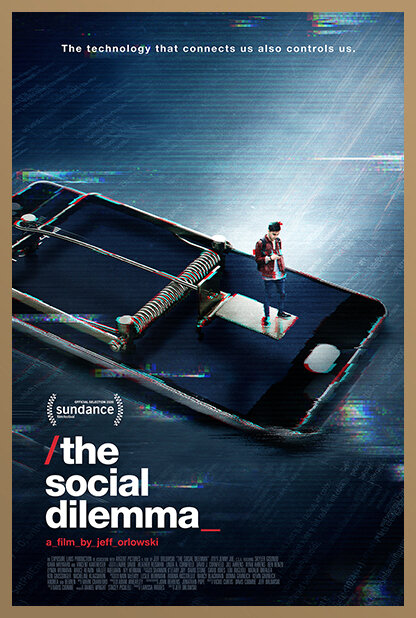
The Social Dilemma - Social media and the (mal)formation of identity


Last night our family sat down to watch the new Netflix documentary, 'The Social Dilemma'. It is well worth watching, and even more important to do so as a family!
One of the points that struck me was the claim that only 2 contemporary industries refer to their clients as users - drug dealers, and social media platforms! I'm sure there are more, but the point is well taken.
As many of you know, I focussed on cognitive neuroscience and identity formation in my first PhD. I have always been fascinated by the ways in which social interactions (intersubjectivity is a basic human need) shapes our identity through desire, fear, and aspiration.
Last year I wrote chapter on this topic entitled:
Forster, D.A. 2019. Social identity, social media, and society: A call for public theological engagement. in Theologische Medienethik im digitalen Zeitalter [Theological Media Ethics in a Digital Age] G. Ulshöfer (ed.). Stuttgart: W. Kohlhammer G. Ulshöfer (ed.). 85–106.
In fact I recommend the whole book, which you can get here: https://amzn.to/2RcU3
Thursday
Sep032020

Compassion Fatigue during the Coronavirus pandemic

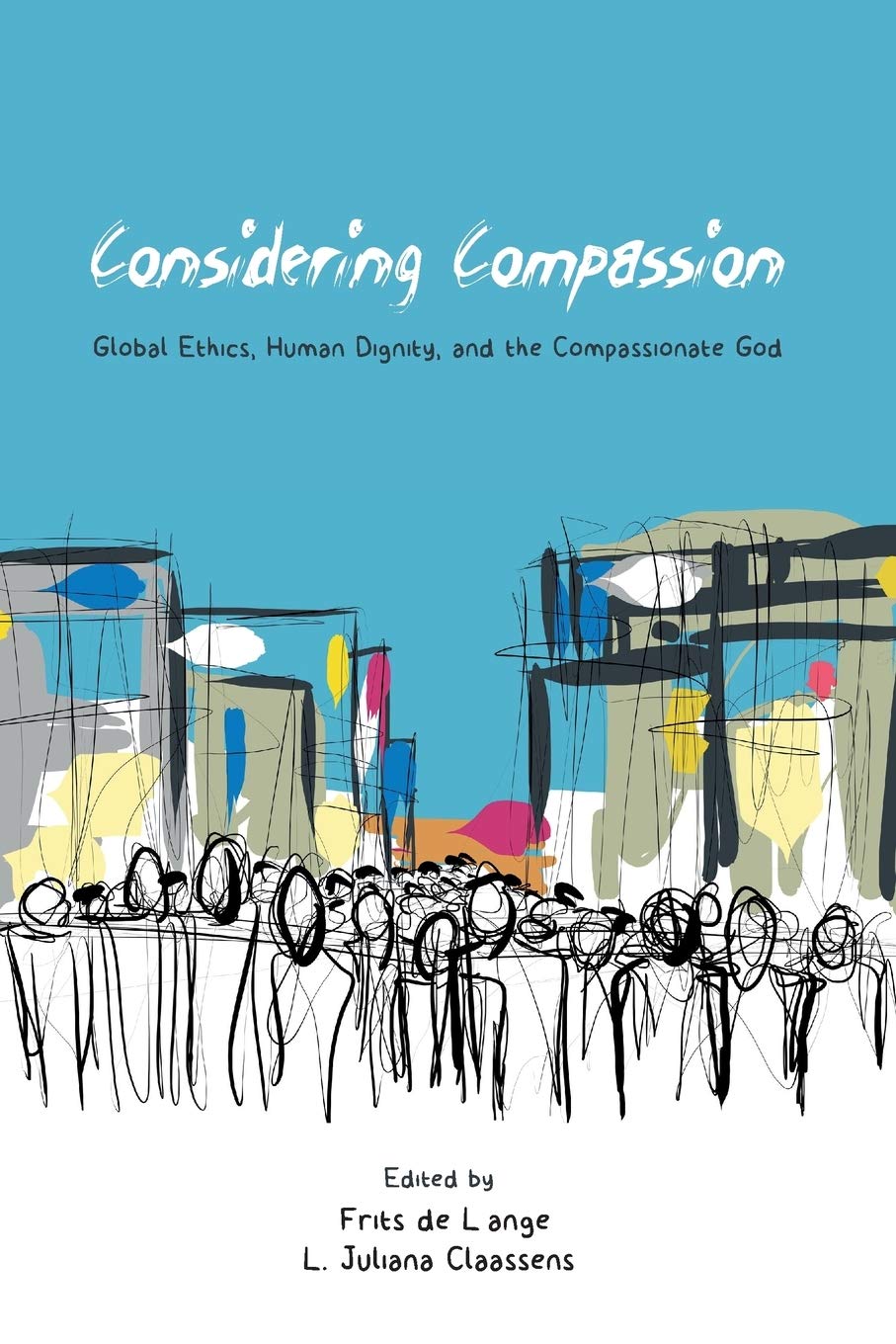
Considering CompassionRecently I have begun to worry that some of us are facing 'compassion fatigue'.

It is understandable, given the immensity of the suffering that so many face, and the constant barrage of information about illness, economics, tragedy, corruption and our inability to 'instantly solve' many of these important concerns.

As I listen to friends, observe reporting in the media, and gauge my own emotional state, I sense that many of us have become 'numb' to the hardship and tragedy that the coronavirus pandemic has brought. Some have chosen to withdraw - those of us who have privilege have the luxury to do so. Others have begun to believe falsehoods, some even spread them - history will not be kind us. Some simply cannot care anymore. That is not our truest nature, and we should never let ourselves fall into something that we are not meant to be.

Please let us always remember that ultimately this is about people. It is about precious people. It is also about sick people who long to be restored to health, it is about vulnerable people who are afraid that they may get sick and not have the resources to recover, it is about people who grieve the loss of loved ones, and long to find comfort and meaning in the midst of loss.

It is about us, and we are human. You matter. You bear the image of a God - a God who is loving and life giving. And so does every other person - even the one's we don't know, don't understand, or don't agree with.

A few years ago I wrote a chapter for a book that was entitled: 'Affect, Empathy, and Human Dignity? Considering Compassion at the Intersection of Theology and Science.' (simply click on the title to download a PDF copy)

(it comes from, 'Considering Compassion: Global Ethics, Human Dignity, and the Compassionate God' edited by L.J. Claassens & Frits de Lange (eds.). Eugene, OR: Pickwick Publications. pp. 3–16.

Maybe it can offer some encouragement, or perhaps an insight into this phenomenon called 'compassion fatigue'.

Please, let's not give up caring.


Friday
Jul242020

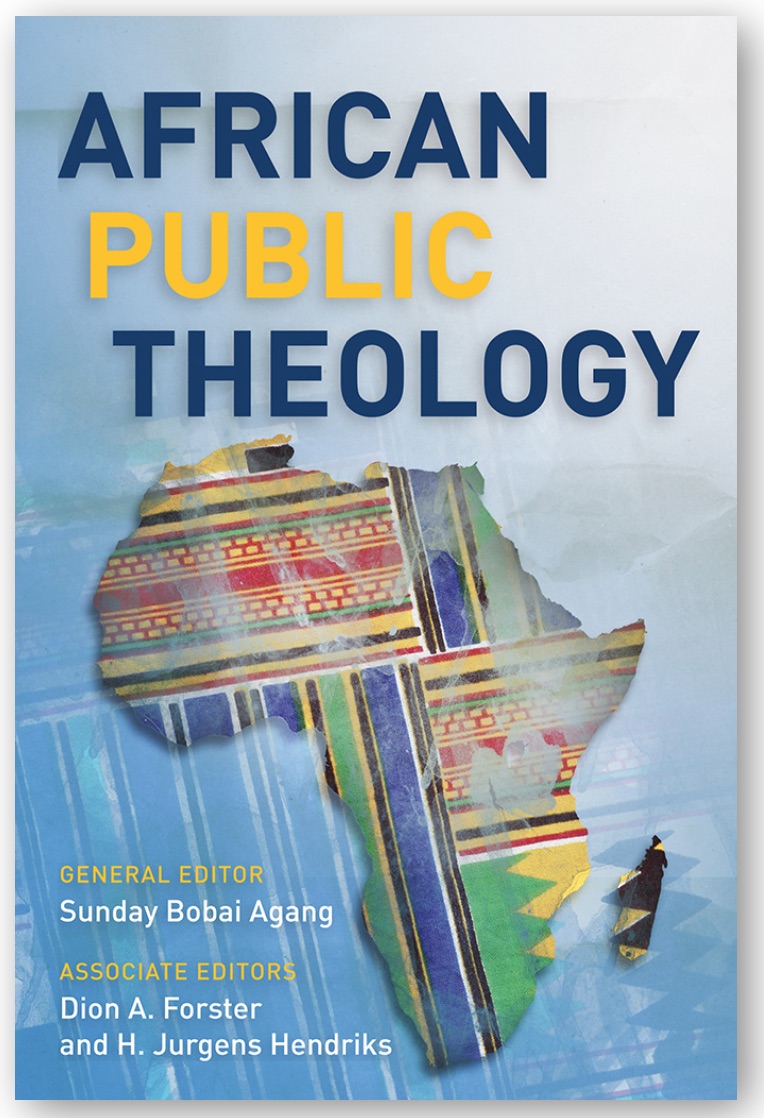
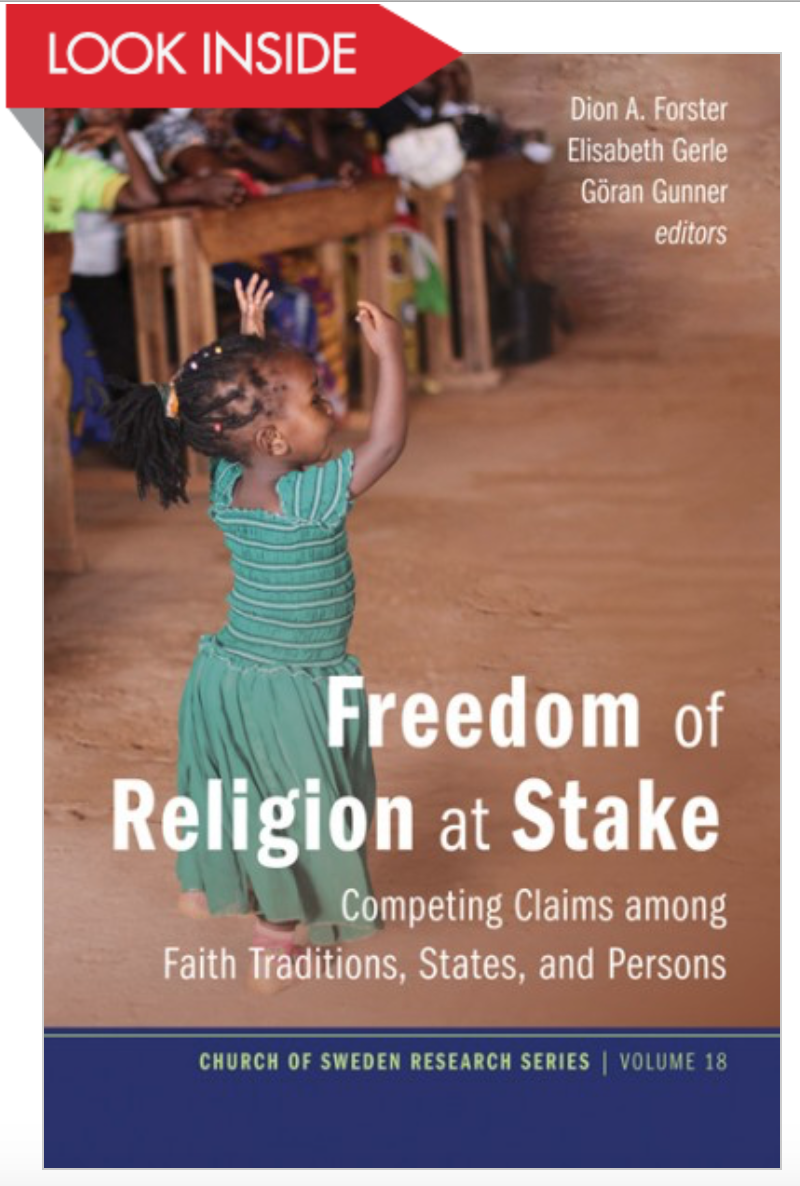
A 'virtual' launch for my 3 new books - African Public Theology; Freedom of Religion at Stake; Reconciliation, Forgiveness and Violence in Africa

The coronavirus pandemic has impacted the way in which all of us live and work.

As an academic, particularly as a researcher, I have had to rethink some aspects of my work. I feel it is important to be accountable for my research - normally after completing a book (as an author and editor) we would have a chance to launch it in person.

Sadly that is not possible at present. We will be doing ‘virtual’ book launches in due course. In the meantime, this video introduces 3 books (actually 4!) for which I was both an editor and an author.

The links to purchase the books are below.

Thanks for watching!

Freedom of Religion at Stake
Reconciliation Forgiveness and Violence in Africa
African Public Theology
Impossibility of forgiveness
Thanks for watching!
As always, I would love to hear your comments, suggestions, ideas, feedback and questions!
Wednesday
Jun102020

We have launched a new podcast - It's not a lecture... just a thought...

I am pleased to let you know that I have just launched a new podcast. It is called, 'It's not a lecture... just a thought'. 

To start with, we will be airing around 100 episodes of 'Manna and Mercy' recordings that my friend and colleague, Rev Alan Storey and I recorded a while ago. They were actually recorded to be played on radio stations throughout Africa, Asia, Europe and the Americas. However, we are grateful to be able to distribute them in this way. At present we are releasing 2 episodes a week (usually on a Tuesday and a Friday). They are available on Anchor.fm, Spotify and hopefully soon on Apple Podcasts.

You can listen to them here as well (see the embedded player below, or click on the Podcast 'tab' on my website). We'd love to hear your thoughts and feedback! So please be in touch! Thanks for listening in!

Wednesday
Jun102020

#BlackLivesMatter

I’m going to say this a clearly as I can - black lives matter.

And if you’re a Christian you should be doing four things:

First of all, witness to the truth and refuse to believe the lies that live within you, and that come from our prevailing culture.

Secondly, bind up the broken. We have a responsibility to care for one another because we share a common humanity and equally bear the image of God.

Thirdly, live the alternative. Find ways to live the kind of life that expresses the values of goodness and grace and justice and mercy.

And finally, replace evil with good. Whatever you can do to see that good prevails, do that in your life.

#BlackLivesMatter

Saturday
Apr252020

New book published - 'African Public Theology' this is a BIG one!

African Public Theology launch announcement April 2020

UPDATE! I am pleased to let you know that as of today the book is available for sale all around the world! It is amazing value for an incredible book - 430 pages, 30 chapters, and at less than US$15 (R350 in South Africa).

You can purchase your copy here:

South Africa - CLF 

International - Amazon 

From the publisher - Langham Publishing 

Original post below:

Yesterday we received the wonderful news that our new book ‘African Public Theology’ was published by Langham Partnership: Hippo Books! 


This is one of the most important projects that I have participated in to date. Professors Sunday Agang, Jurgens Hendriks, and I are the editors of the volume (448 pages). It is the first comprehensive ‘African Public Theology’ with contributions from Academics and Expert Practitioners throughout Africa (Nigeria, Ethiopia, Zimbabwe, South Africa, Burundi, Ghana, Kenya, Tanzania, Malawi, to name a few).


I am so grateful to each of the authors, and to our fellow editors, and particularly to the wonderful team at Langham (in particular Isobel Stevenson). Here is a list of chapters and contributors, and the details for the book that will soon be for sale on Amazon, Google Books, Apple Books, and of course the publisher website (in both print and Digital formats). The cost of the book is extremely affordable for a 450 page book! So, if you buy just one book for yourself, or as a gift for a loved one, this may be a great choice!


https://langhamliterature.org 


African Public Theology 

Editors: Sunday Bobai Agang, Dion A. Forster, and H. Jurgens Hendriks 

ISBN: 9781783687664 Imprint: HippoBooks Format: Paperback Page Count: 448pp 

Available: April 2020 


Table of Contents 

Foreword – Samuel Waje Kunhiyop (Nigeria) Preface – Sunday Bobai Agang (Nigeria) 

PART 1: Introduction to Public Theology 

  •  1  The Need for Public Theology in Africa – Sunday Bobai Agang (Nigeria)
  •  2  The Nature of Public Theology – Dion A. Forster (South Africa)
  •  3  The Bible and Public Theology – Hassan Musa (Nigeria)
  •  4  The Trinity and Public Theology – Tersur Aben (Nigeria)
  •  5  Public Theology and Identity – H. Jurgens Hendriks (South Africa)

PART 2: Public Theology and Public Life 

  •  6  Democracy, Citizenship and Civil Society – Jane Adhiambo Chiroma (Kenya)
  •  7  Work – Sunday Bobai Agang (Nigeria)
  • 8  Economics – Piet Naude (South Africa)
  • 9  Poverty – Collium Banda (Zimbabwe)
  • 10  Rural Community Development – Olo Ndukwe (Nigeria)
  • 11  Education – Samuel Peni Ango (Nigeria) and Ester Rutoro (Zimbabwe)
  • 12  The Environment – Ernst Conradie (South Africa)
  • 13  Science – Danie Veldsman (South Africa)
  • 14  Health – Daniel Rikichi Kajang (Nigeria)
  • 15  Human Rights – Kajit J. Bagu (John Paul) (Nigeria)
  • 16  Gender – Esther Mombo (Kenya)
  • 17  Migration and Human Trafficking – Babatunde Adedibu (Nigeria)
  • 18  Refugees and Stateless People – Benaya Niyukuri (Burundi)
  • 19  Interfaith Relations – Johnson A. Mbillah (Ghana)
  • 20  The State – Theodros Assefa Teklu (Ethiopia)
  • 21  Police and Armed Forces – Sipho Mahokoto (South Africa)
  • 22  Land Issues – Dwight S. M. Mutonono (Zimbabwe)
  • 23  The Media – Bimbo Fafowora (Nigeria) and Rahab N. Nyaga (Kenya)
  • 24  The Arts – Ofonime and Idaresit Inyang (Nigeria)
  • 25  Leadership – Maggie Madimbo (Malawi)
  • 26  Intergenerational Issues – Nathan Hussaini Chiroma (Nigeria)

PART 3: Public Theology and the Church 

  • 27  Christianity and the Church in Africa – Matthew Michael (Nigeria)
  • 28  Mobilizing the Church in Africa – Alfred Sebahene (Tanzania)

Endorsements 

Though there are thirty authors from different backgrounds and disciplines, there is unity of purpose, clarity and continuity in this highly readable book. African Public Theology is one of the most important theological books to come out of Africa in 2020 and should be a pacesetter for future African theologies. 

SAMUEL WAJE KUNHIYOP, PhD 

Former General Secretary, Evangelical Church Winning All (ECWA) Author, African Christian Ethics and African Christian Theology 

The writers seek to discover how the church can truly be light and salt, heralding transformation and change. This is essential reading for all theological colleges and concerned Christians. 

 THE MOST REV BENJAMIN A. KWASHI, DMin 

 Bishop of Jos, Nigeria General Secretary, Global Anglican Future Conference (GAFCON) 


You can download some more information about this book here. 

Thursday
Apr092020

Should we take our Churches ‘online’? What about ‘digital sacraments’, ‘digital liturgy’, and ‘virtual community’?

As we near the end of the 2nd week of strict ‘lockdown’ in South Africa in an attempt to curb the spread of the coronavirus, we have seen just about every possible social function going online! Virtual classes, virtual exercise sessions, virtual meetings - and of course, also virtual Churches! Or at least, Churches operating in digital spaces (Zoom, Facebook, YouTube, Microsoft Teams, Google Hangouts etc.)


Today I speak with an expert in this field, Dr. Nicolaas Matthee. Nicolaas is a Researcher and Instructional Designer who did Doctoral Research on ‘digital liturgies’. Nicolaas has reflected on what it means, theologically, to take our faith ‘online’, and there are some rather interesting, and surprising, findings! Perhaps, for me, the most remarkable one, is that it actually doesn’t make that much of a difference! Most people ‘make sense’ of the world, their lives, and so also their faith lives, in whatever way they can. So, if they can meet in person and it works, that is great. If that is not possible, they simply seek an alternative means, and if that is digital, that is great!


In this VLOG we talk about the implications of taking our Churches online. What does this mean during times like the Covid19 pandemic ‘lockdown’? What does it mean once we can return to some form of ‘new normal’ (perhaps meeting physical again)? Will we still maintain a digital presence in some form?


We also discuss some of the more tricky theological issues, such as liturgy and pragmatism, and the conflicts with ‘rigid’ belief systems. For example, we don’t mind going online, and perhaps even celebrating some sacraments (like Communion) online because we live with the hope that we will ‘return’ to what the Church has done for most of its history. But what if there was a reason (a pandemic, an ecological disaster) that meant we had to ‘stay online’ indefinitely? Would we still hold to beliefs in the ‘real presence’ of Christ in the bread and wine that is set aside by the Priest as Celebrant? Or would we change such beliefs?


Nicolaas, also gives us some insights into what will keep persons engaged in ‘online’ worship services, what kinds of liturgies ‘involve’ participants and so are more meaningful, and what some of the less desirable ways are of doing our ‘online communities’.


You can find out more about Nicolaas and his work here:


And, you can connect with him on Facebook here:


You can download a copy of Nicolaas’ very interesting Doctoral study here:


Matthee, FJN, 2019. ‘Cyber Cemeteries as a Challenge to Traditional Reformed Thanatological Liturgical Praxis’. Pretoria: University of Pretoria. 


Thumbnail credit to:


Thanks for watching! As always, I would love to hear your comments, suggestions, ideas, feedback and questions!

Please subscribe and like the video!

You can follow me on:

Facebook: http://www.facebook.com/DionAForster

Academia (research profile): https://sun.academia.edu/DionForster

Twitter: http://www.twitter.com/digitaldion

Instagram: http://www.instagram.com/digitaldion

Web: http://www.dionforster.com

Youtube: http://www.youtube.com/dionforster

Saturday
Feb082020

Religious Freedom at Stake - Our new book is available with Wipf & Stock

This has been a wonderful week! I learned today that our new book 'Freedom of Religion at Stake: Competing Claims among Faith Traditions, States, and Persons' (Wipf and Stock Publishers, 2019) was released! Elisabeth Gerle, Göran Gunner and myself were the editors of this wonderful volume.

Among the other authors were Hennie Kotzé, Newton Kahumbi Maina, Damaris Parsitau, Keith Matthee (SC), Ma Plaatjies van Huffel, Nokuzola Mndende, Selina Palm, Fatima Seedat, Charlene Van Der Walt, Peter Petkoff, Elizabeta Kitanovic, and of course Elisabeth Gerle, Göran Gunnerand Dion Forster.

Here is the official link to the book on the Wipf & Stock website: https://wipfandstock.com/freedom-of-religion-at-stake.html

Here are the endorsements for the book:

“If secularism fears religion for its threats to freedom, religions have reason to fear the inverse threat of secular stereotypes. Yet religion represents as irreducible a multiplicity as do the modes of modern secularization. With its brilliant plurality of African and European voices, this volume probes key entanglements of power, ethics, and faith. It constructively illumines the tensions not only between conservative and progressive theologies but between reactionary nationalisms and liberal pluralisms.”

—Catherine Keller, Drew University, author of Political Theology of the Earth: Our Planetary Emergency and the Struggle for a New Public

“This volume brings readers, students, and scholars to a more nuanced knowledge of what religious freedom might mean, specifically highlighting how the very concept of religious freedom can oppress and marginalize minority positions within main religions. The volume gives a rare combination of concrete and critical case studies from both the South and North, as well as new and challenging theoretical reflections.”

—Trygve Wyller, University of Oslo

“This book will help the reader grapple with the issue of what is really meant by justice for all and for creation. People of faith, academics, and politicians are challenged . . . to widen the conversation to include freedom from religious abuse within faith traditions and from impinging the human rights of some individuals and the earth.”

—Isabel Apawo Phiri, World Council of Churches

Monday
Jan062020

9 points to avoid being hoodwinked by war propaganda - remember it is about the lives of people, and we are responsible

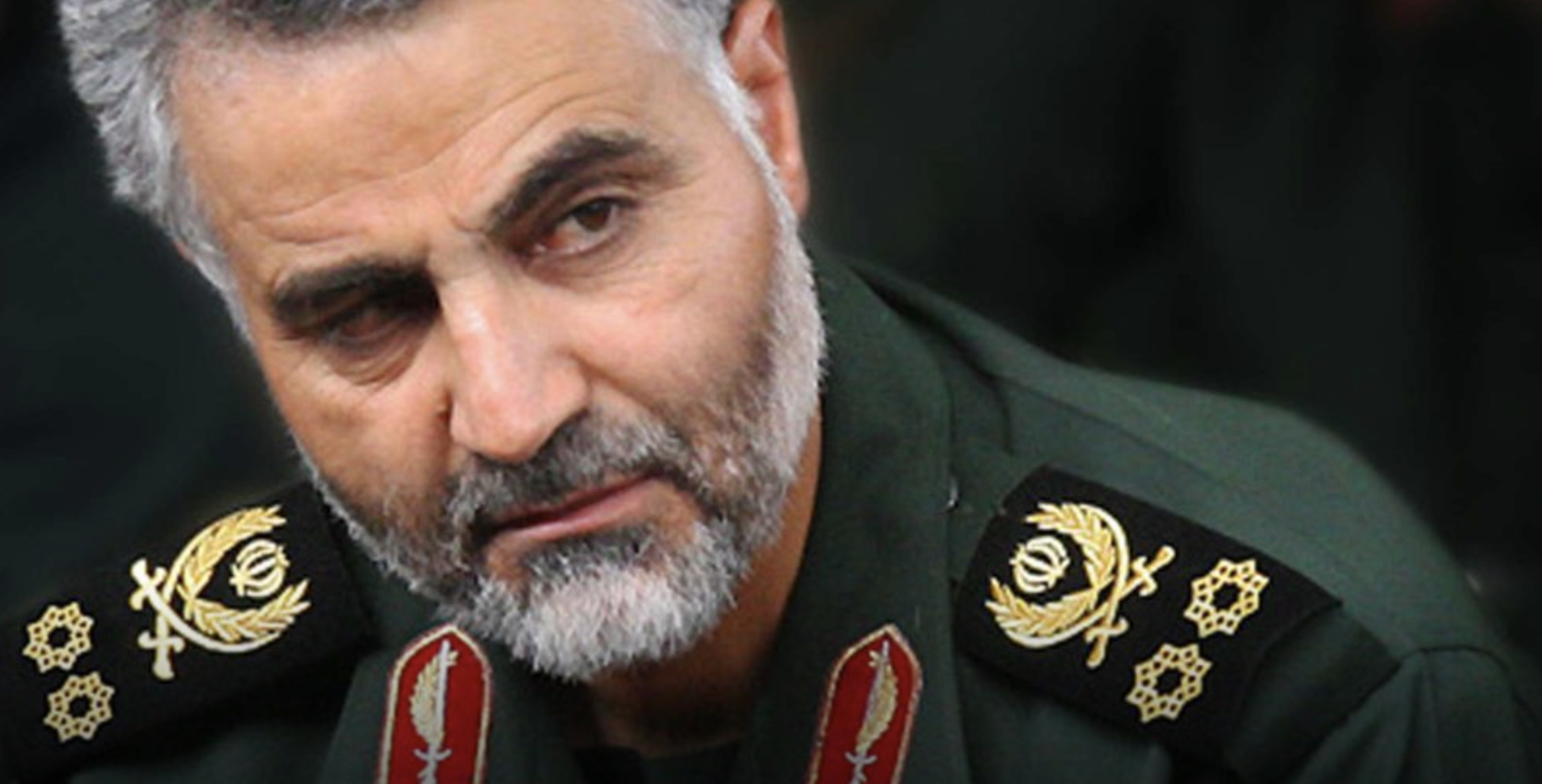
After the United States assassinated General Qasem Soleimani, the rhetoric for war, justifications for the killing, and political to and fro have flooded the media and general conversation. Some have suggested that, in part at least, this was a deliberate move by the Trump administration to distract the American public from Donald Trump's impeachment woes. Regardless, it is important to remember that war is always about people. It is about children, girls and boys, it is about women and men, who will loose their lives and suffer a great deal because of what powerful persons decide to do. In such a climate it is essential that we are discerning and vigilant. We bear a great deal of responsibility for what our 'leaders' do on our watch. We elect them to serve us. As such, we have a responsibility to ensure that we are informed, and that we hold them to account for truth, justice, and what is good and right. I came across this great 'Current Affairs' story, written by Nathan J. Robinson, entitled 'How to avoid swallowing war propaganda.' I have summarised a few of the points below. You can read the original story (which is well worth reading, and sharing) here.
Here are a few good points to avoid being hoodwinked by propaganda:
1. Things are not true just because a government official (or report) says them (remember GW Bush and the ‘weapons of mass destruction’?) Politicians are dealing with complex agendas. They are seldom only doing one thing. This statement, or this report, may form part of a much larger, lesser known, or less obvious, political agenda.
2. Do not be bullied into accepting simple-minded sloganeering (simply stated, things are never as simple they are made out to be. Populist rhetoric is appealing because it casts very complex issues in overly simplistic ways: Us versus them, good people versus bad people etc.) Friends, even family, will try to bully you with simplistic, inadequate, populist rhetoric. With love, and in grace, refuse to be bullied into accepting half truths or blatant lies, just because they are easy to repeat.
3. Scrutinize, unpack, and understand all of the aspects of the various arguments. Try to see, and understand things, from a variety of perspectives and contexts. What might it feel like to be an Iraqi at this time in history? As an African, I know how it feels to be written off as coming from a ‘shit hole country’, to be viewed with suspicion and mistrust when traveling to the US. Your view of the world, and your take on ‘the facts’ is biased. It is based on your unquestioned convictions, prejudices, and cultural suppositions. Do your best to place yourself in the life and experience of the supposed ‘other.’
4. Keep focussed on what matters. This is important! Our actions, our speech, our perspectives of the world, are all shaped by our values. Work out what it means to be a ‘good person’, or a ‘good society’. Commit yourself to virtues such as justice, compassion, humility, courage, and truth - then keep those as the central focus of your life. Let your decisions, your reflections, and your choices, be shaped by these values and commitments, and not by the shifting ‘facts’, and emerging details, and emotional rhetoric.
5. Remember that emphasis matters - become a student of communication theories and techniques. Don’t just pay attention to what is said, also ask yourself what is not said, or what is said more loudly, or more frequently. Why is this so? Who is saying it? In what settings are they saying things? Communication is manipulative. That is a reality. Become wise and discerning about what is said, how it is said, by whom it is said, how frequently it is said, but also what is not said, who is not being heard, what is being silenced, and why is it being silenced.
6. Imagine how everything would sound if the ‘other side’ said it (or did it!) This relates, in part, to point 3 above. The simple point is that we should not blindly give over our agency to others. Simply because someone is a spokesperson for ‘our side’, it does not make them all virtuous, or all knowing. Scrutinize what is being said, not only for truth, and values, but also for how it may communicate to those who are not part of your group of community.
7. Watch out for euphemisms, metaphors or similes. Forms of speech are powerful tools in propaganda. The Rwandan genocide showed that when we begin to regard human persons as less than human (they spoke of ‘cockroaches’) we can quickly de-humanize them and perpetrate all sorts of abuses. So take care of words like ‘terrorists’, ‘murderers’, and other such terms. Also, be sensitive when your own government uses ‘softer’ or ‘technical’ terms for brutal acts. The killing of persons, and the waging of war, is a deeply personal act for every woman, child and man, who will loose their lives. Never forget that! It is not about policies, or territories, or sound bites. It is about people and what we choose to do to them.
8. Cultivate a memory - remember what people where saying 5 minutes, one day, one week ago. In the online media, 24 hour news cycle, world it is easy to get swept along with only what is said right now. Powerful people and organizations hope that we will forget their previous commitments, statements, and promises. Truth matters and consistency is one measure of truthfulness and justice.
9. Keep an imaginary ‘Noam Chomsky’ on your shoulder. Noam Chomsky is one of the most important linguists of our time, he also happens to be one of the most astute political and social commentators. He understands language, communication (both what is said, and how it is received) and often ‘cuts through’ the noise and manipulation of propaganda to help one see, and hear, what is truly going on. Chomsky will encourage you to avoid ‘spin doctors’, stocking up on ‘partisan news’, and getting too settled or entrenched in your own comfortable commitments. Question everything.
So please, beware! We are dealing with human lives, and the wellbeing of creation here. Make every effort to be discerning, to seek after the truth (even if it is unsettling), and to question the perspectives and positions that you are normally most comfortable with. Most of all, make some value choices - choose to be virtuous and to cultivate the virtues in your thoughts, speech and actions.
Friday
Dec202019

Our social sinfulness - we need a new economic and political imagination

From Mail & GuardianWealth is an unkind master. It owns us, when we think we own it, and it haunts and taunts us, when we do not have it.

I find it painful, and perplexing, that in such a deeply religious country, we live with such an unjust and systemically violent system. It runs counter to our morals and values for justice, care, and dignity. I wish we had the courage, and the creativity, to re-imagine our social and individual economic lives.

We need economic systems that serve our common good, not systems that enslave us, robbing us of dignity and fullness of life. Rampant free market capitalism is like a fire let loose in a forest. Without proper boundaries, it is not useful and constructive. It does not warm our bodies, cook our food, or sterilize our water. Rather, when left unchecked it will devour everything in its path and leave a wasteland of destruction.

South Africa, indeed South Africans, we have work to do. If you are a person of faith, particularly if you are one of the 86% of South Africans who indicated that you are Christian in the last General Household Survey, then I want invite you to pray with me, to ask difficult questions, to seek for solutions. We may not yet know what the answers are, but at least we can name what is wrong, and commit ourselves to find ways, in our daily lives, to replace evil with good.

We need a new economic and political imagination. You can read the article 'Why South Africa is the world's most unequal society' here. And, here is a short video that I made some years ago about Stellenbosch, the city in which the University at which I teach, is located. It is regarded as the most unequal city in the world.