
Search

Follow me on ResearchGate

Follow me on ResearchGate

Pages
Social networking

Entries in Global Network for Public Theology (2)

Sunday
Nov302025

Save the Date: 19–23 October 2026, GNPT Interim meeting Amsterdam

We would like to begin by expressing our deep gratitude to Prof. Sebastian Kim and the organising committee at Fuller Theological Seminary for hosting an exceptional GNPT Consultation in 2025. Their commitment ensured that our community could still gather, reflect, and learn, even when an in-person meeting proved impossible.

We also wish to thank Prof. Kim for his service as President of the GNPT Executive Committee. In keeping with GNPT practice, he has kindly agreed to remain on the Executive in an advisory capacity as we prepare for our next formal meeting. Prof Dion Forster now takes up the responsibility of serving as hosting Chair/President in the period leading up to our next regular GNPT meeting, which will be hosted in Hong Kong.

It is therefore our pleasure to invite you to save the dates of 19–23 October 2026, when we will gather for an interim in-person meeting of the Global Network for Public Theology at the Vrije Universiteit Amsterdam. The event will be hosted by the Chair for Public Theology and Ethics at the VU Amsterdam, in partnership with colleagues from Chairs and Centres for theology and religion across the Netherlands and the wider European region.

Our proposed theme for this interim consultation is:

Public Theology in a Fractured World: Voices, Visions, and Vulnerabilities

A fuller description of the theme will be circulated in early January.

The Vrije Universiteit Amsterdam was founded 145 years ago by the Dutch Public Theologian and statesman Abraham Kuyper. It has long been a home for robust and socially engaged theological scholarship. Its history includes honouring several figures of global significance with honorary doctorates, among them Martin Luther King Jr (1965), Beyers Naudé (1972), Dom Hélder Câmara (1974), and Marilynne Robinson (2016). 

We look forward to welcoming the GNPT community to a university with a rich and enduring commitment to the intersections of faith, scholarship, and public life. And to hosting you in the historic, diverse, and beautiful city of Amsterdam!

Please note the following key dates for your planning:

  • 19–21 October 2026: Interim meeting at the VU Amsterdam, including plenaries, working groups, networking, and the GNPT business session.

  • 22 October 2026: Optional excursion day exploring the historical city of Amsterdam (details will follow).

  • 23 October 2026: Optional attendance at the Inaugural Professorial Lecture for the Chair of Public Theology and Ethics, Dion Forster, at the VU Amsterdam (15:45). All GNPT participants are warmly invited to attend.

More detailed information about our meeting will follow in the first week of January 2026, including the formal Call for Working Groups and Papers, which will also be posted on the GNPT website. We anticipate capping participation at approximately 100 attendees, and registration will open in March 2026.

For now, we kindly ask you to save these dates in your calendars.

We will soon set up a new GNPT mailing list.

Should you have any questions, you are warmly invited to contact Dion Forster at: d.a.forster@vu.nl

With peace, courage, and hope for the work that lies ahead,

On behalf of the Executive Committee of the Global Network for Public Theology
Tuesday
Dec042018

Call for Papers: Global Network for Public Theology, 23-26 September 2019, Bamberg Germany

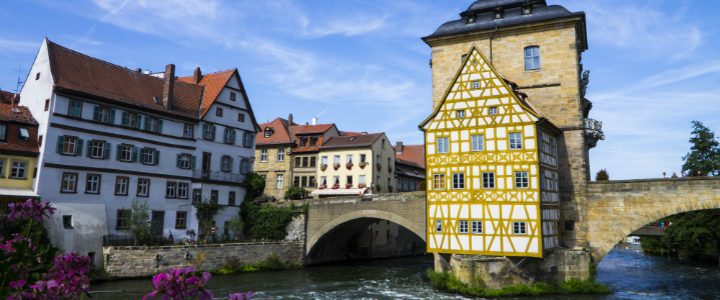
The next meeting of the Global Network for Public Theology will take place form 23-26 September 2019 in the beautiful city of Bamberg in Germany. This event will be hosted by the Dietrich Bonhoeffer Centre for Public Theology at the University of Bamberg. 

I had the joy of visiting the centre, and doing a public lecture there, in May 2017.

You can download a PDF copy of the call for papers here.

The call for papers for the next meeting is now open. The closing date for abstracts is 31 December 2018. The title of the conference is:

“Place and Space: Theological perspectives on living in the world”

Here are some further details on the theme.

Public theologies reflect on the contextuality of the Christian religion. Much of this contextuality is dependent on place: place as the culture and the society in which religions are situated, place as the position from where a theologian speaks, place as the biographical contingencies that shape people’s lives. Moreover, public theologies ask for the contribution of Christian ethics to society, thereby shaping the social, cultural, and religious space to which they belong. The consultation analyses the categories of space and place to deepen the understanding of contextuality as well as to explore glocal problems.

Proposals addressing one of the following dimensions are welcomed:

  •  place to live
Who belongs to a nation, society, or community? Who may belong? How does migration influence societies? What are the possibilities – globally and locally – to alleviate the drawbacks that may result from the chances of birthplace?
– keywords: migration, homelessness, new concepts of housing; trading citizenships; colonised and invaded space, work in a globalised world

  •  space to live
How is public space shaped and used? How do forms of aesthetic expression change the self-awareness of a society? How can public space be prevented from eroding? How do we deal with spaces of exclusion from society?
– keywords: civil society, urban development, architecture and aesthetics, memorials and monuments, perception of and public support for public space, private and public space

  •  sacred space
How is the distinction between “sacred” and “profane” drawn in different contexts? What is the public function of sacred places in religiously plural societies? Can spirituality encourage to move beyond existing borders? Which heterotopias, sacred and secular, can we discover?
– keywords: churches as space within space: encounter with God, space for retreat, place of commemoration, platform for intercultural exchange; church buildings and their secular use; the church within society: mechanisms of exclusion and paternalism of inclusion;

  •  space and speech
From where do we speak? How does religion affirm or challenge mechanisms of segregation?
– keywords: theologies of positionality and their limits: nationalism, theology of the land; populist movements;
lebensraum; space and perspective

The conference language will be English.
Accepted papers might be published in the conference proceedings.

  •  politics of space

Which borders regulate access to the public in a given society? Is there a hierarchy of spaces within society?

– keywords: the public and civil society; gender, race, and other ways of coding public space; othering and asymmetries of social construction, zones and milieus, criteria of access and marginalisation, permeability of social space(s); space and stage: self- presentation in public

  • God and space

How does the spatial turn influence our image of God? How to deal with God's presence and absence in biblical theology and contextual perception? How is our perception of God shaped by its context?

– keywords: contextual theology and the doctrine of God; instances of kenotic theology: creation theology, theology of liberation; divided obligations: to the state, to God

  • Deadline for proposals and submission guidelines

We invite theologians and scholars of neighbouring research areas to submit proposals of no more than 300 words by December 31st, 2018. These can be submitted electronically to dbfoet.fs-oet@uni-bamberg.de. Please add a (provisional) title to your proposal and send us your contact details.