Search

Follow me on ResearchGate

Follow me on ResearchGate

Pages
Social networking
Wednesday
Aug192009

10 Twitter commandments... Thou shalt not...

Twitter is becoming more and more popular! You can follow me on twitter @digitaldion - so, I thought I would post these 10 commandments for twitter use!

I know I've transgressed a few! What about you? Are there any other 'commandments' that we should be following for twitter us? Here's the post!

Twitter can be used for many things. From communicating with friends, family and associates to building an online profile to promoting products and services, many individuals employ Twitter for important functions.

But some of them shoot themselves in the foot by engaging in Twitter sin.

Here are The 10 Twitter Commandments that will keep you away from sin:

  • Thou shalt not use DM autoresponders. More often than not, DM autoresponders are used poorly. Unless you have a good reason to use them and know what you're doing, consider avoiding them altogether.
  • Thou shalt not beg for retweets. If your content is good, other Twitter users will retweet it. Asking "pls RT" makes you look desperate.
  • Thou shalt not autotweet. Unless your followers followed you to get automatic updates (eg. they know your account is tied to a content feed), autotweeting is usually a bad idea.
  • Thou shalt not tweet in bunches. You know the guy who always sends out a couple dozen tweets in rapid-fire succession? Don't be that guy. Sending lots of tweets in a short period of time is just downright annoying.
  • Thou shalt not take your followers on a trip to hashtag hell. Hashtags can be extremely useful but they're frequently abused by spammers, marketers and applications. So choose which ones you use wisely. Hint: hashtags relating to body parts, private matters, illegal activities and words you wouldn't use in the presence of your grandparents are usually the ones to avoid.
  • Thou shalt not sex up your avatar. Everyone loves a pretty face but when it comes to your Twitter avatar, make sure that pretty face is your own. Using a photo of a beautiful woman or a studly man to attract attention is suitable only for the lowliest of spammers. And don't forget to keep your clothes on; your rock-hard abs may be worthy of exhibition on the beach but you probably don't need to show them off in Twitter's public timeline.
  • Thou shalt not oversell. This is 'social' media. Just as nobody likes the person who is constantly selling vaccuum cleaners at the cocktail party on Friday, nobody likes the person who is selling via tweet 24x7. So even if you're using Twitter for business purposes, don't go overboard with the pitches; providing value with your tweets will do more for your selling efforts than 140 characters of hard pitch.
  • Thou shalt not overfollow or autofollow. If you have 500 followers but are following 5,000 people, something is wrong. Some people have sophisticated beliefs regarding follower ratios; I don't. But common sense is in order: there are plenty of reasons not to follow other users and you should only follow people who you find interesting. As it relates to autofollowing, if I told you I was jumping off a cliff, would you follow me over the edge? Hopefully not. Consider applying the same logic when it comes to who you follow on Twitter.
  • Thou shalt not sell out. Tweeting a message for a company for a chance to win a free laptop may be a good deal for the company but you'd probably ask for more if you were selling your soul and not your Twitter account. Even so, by tweeting marketing messages for compensation (or a chance at compensation), you send the message that you're easily bought and sold. That's probably not a message you want to send.
  • Thou shalt not tweet before thinking. You are what you tweet. So think twice before saying something dumb. From retweeting a fake news story to crudely voicing a opinion that makes you look like a jerk, there are plenty of ways you can put your foot in your mouth in 140 characters. So keep your shoes on and your feet on the ground by thinking before you hit 'update'.
Taken from here. Tweet this

Monday
Aug172009

Radio Pulpit now have its own radio channel on DSTV!!

Here's some great news! Radio Pulpit is a great South African Christian Radio station. You can now tune into Radio Pulpit if you have a DSTv decoder in Africa. My show, 'The Ministry and Me' does its lead broadcast on a Wednesday at 9am (Central African Time), and then rebroadcasts a few times throughout out the week.

Here's how you can tune in.

To tune in, do the following:

  • Press "TV Guide" on the remote control.
  • Select "Music & Radio".
  • Select channel 182; this is Radio Pulpit.
  • Press "OK".
  • To return to the normal programming on DSTV:
    • Press "TV" on the remote control twice.
    • Select DSTV.
    • Press "OK".

For the latest decoders:

  • Press "SHIFT" followed by the "TV" button for direct access to the Audio Bouquet.
  • Go to channel 182; this is Radio Pulpit.
  • To return to the last viewed video channel, press the "TV" button again.

For all technical. accounts and programming enquiries please call your nearest Multichoice centre:

  • 083 900 DSTV (3788) (VAS rates apply)
  • Johannesburg: (011) 289-2222
  • Pretoria: (012) 422-2222
  • Cape Town: (021) 508-2222
  • Durban: (031) 710-2222
  • Port Elizabeth: (041) 395-2222
  • Bloemfontein: (051) 503-2222

By the way, you can also listen on your cell phone if you don't have DSTv - follow this link to find out how.

Sunday
Aug162009

The politics of IQ? Smart bombs and the nature versus nurture 'wars'...

I came across this incredibly thought provoking, and detail filled, post on the relationship between IQ and power, a discussion of the debate between those who advocate nature as more powerful than nurture, and of course those who propose the contrary view.

In the light of what I have been reading recently (Malcom Gladwell's Outliers and Zachary Shore's Blunder) this has brought an entirely fresh perspective on the complexity of the relationship between individual identity and ability, and the complexity of social forces (particularly as they relate to success and power). For example, persons with a high IQ don't necessarily become successful - some are extremely intelligent in a linear sense, but lack the basic social graces and abilities to establish meaningful relationships. Of course the reality is that very little in life happens without being able to do it with others, or because of their favour, help and grace. Conversely, there are some persons who do not have a very high IQ, but understand that applying certain types of force and social pressure can lead to certain results (like many criminal minds who use force and domination to achieve their objectives). I have worked with a few persons like this in the past! I am astounded that they manage to achieve as much as they do their sheer force and power! Yet, they understand where the pressure points are in society and act upon them. Fear is a very powerful motivator, sometimes even more powerful than insight or knowledge! Am I right?

Anyway, for those who are interested here's a great post on this subject (and others). Please do let me know what you think! I would love to hear your insights on the relationship between IQ and EQ (and of course SQ for those who are aware of it)...


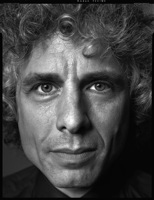
 About Photographs Steven Pinker3 4X6 150Dpi In February, 2009, I approached Steven Pinker, a deep thinker about linguistics and cognitive science who fishes where the two streams flow together, with a request for an interview. I was on assignment for the cultural studies journal Cabinet, writing a personal essay that would intertwine my own fraught relationship to the notion of intelligence with a historically informed critique of the cultural politics of the IQ test, specifically the Stanford-Binet and its successor the Wechsler.

A professor in the Department of Psychology at Harvard University (until 2003, he taught in the Department of Brain and Cognitive Sciences at MIT), Pinker has popularized his theories of language and cognition through articles in the popular press and via critically acclaimed books such as The Language Instinct, How the Mind Works, Words and Rules, and The Stuff of Thought: Language as a Window into Human Nature. The furthest thing from a vulgar Darwinian---he rejects the term "genetic determinism"as a social-constructionist slur---Pinker is nonetheless a vigorous opponent of what he contends is the ideologically inspired insistence (often from the academic left, he maintains, and typically from those in the humanities rather than the hard sciences) that we are exclusively products of cultural influences, rather than, as he puts it, "an evolutionarily shaped human nature."In his popular critique of this assumption, The Blank Slate, he takes up the sword for evolutionary psychology, behavioral genetics, and cognitive science against social constructionism.

Exhaustively knowledgeable about the science of cognition, and a foeman who gives as good as he gets (if not better) in the nature-versus-nurture culture wars, Pinker seemed the perfect foil for some of my ideas about the IQ test. Thus, I was delighted when he agreed to an informal e-mail exchange that lasted through much of February and into early March. I was equally chagrined when I had to inform him that his thoughtfully considered, sharply argued quotes didn't make it into my published essay. Happily, my guestblogger stint offered the perfect solution: publish our spirited exchange as a Boing Boing exclusive. I owe Professor Pinker a debt of gratitude for allowing me to publish our interview on Boing Boing. I'm very much the beneficiary of his deeply insightful, eloquently argued ideas; the privilege of sharpening my ideas on the whetstone of his intellect is a rare one, and I'm delighted to share that opportunity with Boing Boing's readers...

Continue reading Smart Bombs: Mark Dery, Steven Pinker on the Nature-Nurture Wars and the Politics of IQ.
Another great story from BoingBoing.

Sunday
Aug162009

Spot the beast in the forest!

It is another beautiful day in Cape Town today! So, I woke up early
and took 'the beast' for a nice loooooong ride in the Silverboom Kloof
forest just behind our house. It has some incredible single track!
And, let's be honest, there are few people that have the luxury of
such an icredible mountainbiking spot in their back yard!

Otium sanctum...

Sunday
Aug162009

A holy Sunday!

The semitic religions share a common understanding of holiness. To be holy means to be set aside for a specific purpose that is in keeping with God's intention and will. This is a holy Sunday! Megan, Courtney, Liam and I are enjoying a lazy afternoon at our local beach. This day is set aside for rest, and particularly for rest that is filled with joy, thanksgiving, and appreciation.

I know that this otium sanctum (Holy Leisure) will sustain us to face the business and demands of this coming week with joy and intention.

Thanks be to God for this day, this place and most of all these people!

Saturday
Aug152009

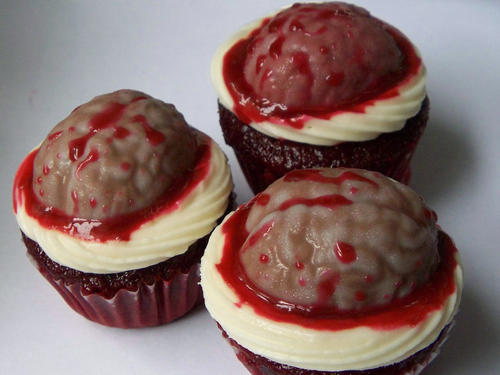
Food for your brain... Or should that be LIKE your brain...

Would you eat a cupcake that looks like your brain!? This gives new meaning to the phrase 'brain food'!


These brain cupcakes were made with "red velvet raspberry cake with French vanilla cream cheese frosting and a chocolate brain by Pamela."

Brain Food

Another great find from BoingBoing' Cory Doctorow!

Now, I'm off to cycle! Have a great day!

@digitaldion

Thursday
Aug132009

Is Greed to blame for the current world economic crisis?

Today was truly a special and remarkable day! I had the privelage of speak at a gathering at the University of Pretoria at the invitation of my friend Cobus van Wyngaard and Professor Etienne de Villiers. You can read the official notice of the lecture here, and here.

The participants in the debate were:

Mr Dawie Klopper, an economist involved in PSG Konsult, dr Dion Forster, director of the movement Unashamedly Ethical, prof Deon Rossouw, head of the Department of Philosophy at UP and until recently president of the International Society of Business and Economic Ethics, and dr Vuyani Vellem, deputy executive director of the South African Council of Churches.

I found all of the papers extremely challenging from different perspectives. If I heard correctly Mr Klopper suggested that people are not inherently greedy, rather they are oportunistic in cycles (which has negative consequences for the economy). Prof Deon Rossouw made an extremely well thought through argument that the problem is not individual greed (since some measure of self interest is necessary in society for people to be motivated and moved towards doing things), rather what is at fault is the current system of corporate governance that enforces how companies are regulated. The argument is basically as follows:

  1. Companies are set up to represent the growth (and economic growth) interests of shareholders.
  2. Current legal regulations almost the whole world over hold directors accountable to making profit on behalf of their shareholders in a responsible manner.
  3. Any other motive (no matter how pure it is), such as investing in communities, providing health care, training persons etc. is anciallary and must not interfere with the motive to enrich shareholders!
  4. So, he challenged us to begin to think out of the box to change such regulation (much like the upcoming King 3 report will require) in the interest of social transformation. So, he did seem to say that greed was to blame, but not individual greed.

Dr Vuyani Vellem gave the best researched paper of the lot in my opinion, he spoke of how greed causes a massive imbalance between those who have and those who do not. Moreover, he approached the subject from the perspective of African Liberation thought with a preferential option for the poor. He had numerous wonderful quotes from theologians in various ages of Christian history, African and European theology, and some wonderful suggestions about 'deconstructing' the myth of capitalism and individual gain. He has offered to share his notes and I shall post them here when he forwards them to me. It truly is worth reading, and so I would encourage you to look back for the notes. One of the things that stood out for me was a statement that he made, which is of course true, but I have never considered it! He said that based on the most recent UN report on the world economic system (I need to find the reference), only 20% of the world's population benefit positively from the world's economic system - 80% of the world's population have had to find alternative ways of eeking out an existence IN SPITE of the current economic system. As such he was saying that it is a myth (or ploy) of the powerful an the rich to suggest that this is the only system that works when there are billions of people finding alterntives to it! What a challenging thought!

My presentation (which you can download here 2.2MB) made the following points:

1. Based on current research there SHOULD be enough resources in the world for all persons to have their needs met. However, there is a real problem... I used South Africa as an example to illustrate the problem. Here's the argument:

  • South Africa has the 23rd strongest economy in the world! That makes us 23 out of 220 economies!
  • We have the 2nd strongest economy in Africa (2nd only to Egypt). We have provinces that have stronger economies than most nations in Africa and the rest of the world!
  • BUT, it is clear that we have some real problems with wealth and greed...
2. Greed is clearly the cause of the problem - we live with a scarcety mentality that tells us 'I must hoard stuff for myself because there is not enough to go around'! I illustrated why we have the compulsion to do this by turning to my research on the human brain:
  • Research has shown that a very primal part of the human brain is activated when a person is tempted with greed. Basically, it is that section of the brain that has to do with survival (remember the three questions? Can I eat it / can it eat me? Can I mate with it / will it mate with me? Can I recognize it?)
  • Moreover, the human brain is an efficiency system! It tries to find the most efficient means to survive... Thus it goes for the HIGHEST value at the lowest energy cost... Hoarding is a good option in this framework, as is exploitation, unethical behavoiur and of course GREED!
  • The point is, however, that this is NOT the only way!

3. Proposition 3 is, since our brains respond to 'value propositions' there are numerous examples of people who have chosen sustainability, care for others, not being greedy etc., as a higher value proposition... It is longer lasting, has better effects, and of course it is better for others as well as yourself! I then went on to discuss how Graham Power and the Power Group have taken that value proposition.

You can view a short video summary of my presentation here:

Of course the point that I want to drive home is that we can help people to make 'healthier' value choices to bring blessing and healing to the earth! And, of course from my perspective these will be the choices of the way of Christ's Kingdom!

Well, it was wonderful to be there! I was blessed by the opportunity, and humbled to be asked. It was SOOOO fantastic to see my friend Dr Wessel Bentley and to meet Dr Kobus Kok again, Cobus van Wyngaard and to meet Justin Taylor!

I would love to hear your views, insights and thoughts on greed! Any thoughts? Alternative views?

Tuesday
Aug112009

Don't get fooled! Strathmore's Who's Who... Schmucks!

This evening I got an email from Strathmore's Who's Who - I'm sure some of my esteemed readers and friends have ALREADY been subject to the honour of this email. Let me know if you have!

In short the email notified me that I had been selected for inclusion in a Who's Who publication because of my outstanding achievements. Seriously... Would you believe that you've been selected for a book of remarkable achievements when the first thing they get you to do when you've been nominated is give them the information that they supposedly selected you from...

I was immediately suspicious (mainly because I don't have any truly noteworthy achievements!) - but also because I have had people from all over the world contacting me over the years to ask me if they can award me degrees, republish my papers, publish my Masters and Doctoral Theses, or have me contribute to various books....

The scheme is pretty much the same in each instance... They play on one's vanity. You think something along the lines of 'wow! These folks must see something in me (or my work) that I don't see in myself... Perhaps this is the breakthrough that I need!'

But, at the end of the day what they do is EITHER get you to sign up on their server giving them all sorts of information that they can sell or use (such as demographic and contact information at best, or credit card and identity information at worst), OR they do publish your paper / thesis / article / biographical information in a book... Yup, that's right, they ACTUALLY publish it! (anybody can publish a book! Trust me!) along with many other arbitrary persons or articles (like having a recipe from someone in Canada next to a high school essay from a young man in Sweden, and your theological essay from Africa, just before a photo study of kittens from a granny in Australia....) It's quite a good business model!

The way they make their money is NOT by selling the books, rather it is by charging you a much greater fee than the cost of publishing the book (in the case of Who's Who mentioned above it is US$600) - for this they may even send you a physical copy of the book! You're pleased that you got published, but you wonder how you ended up in a Who's Who book with average achievers at best, and underachievers at worst!

So do the Maths... Let's say they include 1000 'notable' ;-) Who's Who's at US$600 each - they make US$600 000 from the 1000 persons who pay to get published in the book! Let's assume that the cost of printing this book is US$10 (which is fairly high for 1000 copies), and it costs them another US$10 to post it to each person in the book, then they've made US$580 000... Not bad money if you ask me!

At least you'll have your biography / essay / thesis / book or other material published, and all that for only $600!

So, please be careful of these schemes! For more on Strathmore's Who's Who please see this blog post.

As I suggested last week, the reality is that there are NO shortcuts to success! You can see the video, and read the post, or download the podcast about NOT cheating at life here.

My advice, rather work harder than your peers, study more, care more, or do something remarkable to distinguish yourself! If you're not willing to do that then drop me a line... You're the kind of person I'd like to charge $500 to get into a Who's Who book (see, that's $100 cheaper than those other snobs!)...

What other schemes, scams, or clever internet money making schemes have you heard of or come across? These things fascinate me!

Tuesday
Aug112009

Attitudes, energy, the brain, larks, owls and the SHEMA...

You know how you get morning people and evening people!? Some folks like to wake up early and get a good head start on the day (these are morning people), others like to stay up late and work when it's quiet and they can go ahead undisturbed (these are the evening people).... Normally morning people and evening people marry each other!

Well, I think I am an all day person! I like to be up early and I like to work late. There is a biological explanation for this, by the way, it comes back to my research into the human brain.

Since the brain is primarily an organ that is directed towards ensuring that you survive it will do its best to ensure that you get all of the rest you need so that you can be most alert and physically capable of doing your best work when it needs to be done. When the brain senses that you're running low on energy it will start a process in the pineal gland (which forms part of the body's endocrine system) to slow you down, release melatonin into your blood stream and eventually put you to sleep. The converse is also true, when your body realizes that you need to be awake it will engage your endocrine system to start activating your senses (hearing, touch, smell, sight, etc.) so that you wake up and start functioning.

The system that puts you to sleep is called the homeostatic sleep drive, and the system that wakes you up is called the circadian wake system. Each of us is wired differently because of a host of complex factors the most common of which are:

- our physiology and physical state. People who carry more weight require more energy to stay awake and so should have a strong homeostatic sleep drive. People who are fit generally have a more balanced state between sleep and wake patterns since their bodies are accustomed to exerting more energy in shorter bursts without fearing a shutdown (if you're not accustomed to exercise and you suddenly engage in it your body will get a shock and so start shutting down energy intensive tasks in order to ensure longer survival), moreover, fit people tend to sleep better since they are physiologically programmed to optimize the cycles of activity and rest.

- our mental / emotional state. Persons with a normal chemical balance in their endocrine system (and particularly within the brain) have regulated sleep patterns. In a bid to conserve energy and to be efficient the body will largely automate certain functions (like the engagement of the pineal gland as a neuroendocrine transducer for sleep and wake states) based on a pattern or rhythm from your everyday life. So, if for years you have gone to bed at 22.30 your body will know to start slowing you down by 21.30. However, if your mental state changes suddenly (you watch a very scary movie or undergo a shocking experience at 21.30) the body will react to ensure your survival by heightening your senses and releasing adrenaline into your system (so that you can fight of flee). Of course prolonged instances of stress, such as dissatisfaction with one's work environment, a feeling of being trapped in a financial cycle or a bad relationship can also cause an imbalance in the chemicals in the brain which can lead to an altered mental state, which impacts sleep... The net outcome is a fairly destructive cycle! Sadly, some persons turn to prescription sleep medication to help them sleep (introducing chemicals into the system that synthetically mimic the chemicals the brain would normally need to induce sleep), and eventually find themselves hooked on such drugs.

Of course there are a host of other factors that can contribute to poor sleep patterns. The point is simply this, most of us, even those of you who are 'normal' tend to be either larks (wake early) or owls (stay up late).

There are a few persons who have the disposition that I have, which is to be able to stay up late and wake up early without any noticeable effects - I'm an all day kinda person! In my instance it happens to be as a result of a suppressed homeostatic sleep drive and a lack of melatonin. This has served me well over the years, allowing me to study, read, pray and add a few extra hours to most days without feeling the effects. Of course this is also something that you can train your body to cope with by building a natural pattern and fighting some of the urges to sleep longer than is necessary!

I have a few friends that don't deal well with mornings, and a few who tend to crash in the evenings.

What I have discovered is that attitude is a very important part of getting the most out of our days, and of course the whole of our lives! We can choose to take mastery over our minds and our bodies!

You know, a few years ago I made a remarkable discover. I was reading Duet 6:4-5 (the Hebrew Shema) and noticed that it differed slightly from the 'great command' of Jesus as summarized in Luke 10:27. In the Shema we are commanded to "Love the Lord your God with all your heart, and with all your soul and with all your strength". In Luke 10:27 Jesus adds one very important aspect... the mind "Love the lord your God with all your heart and with all your soul and with all your strength and with all your mind."

I once heard a person speaking on this saying that it means that we should love God with our hearts (passionately), with our soul (intimately), our strength (practically), and with our minds (creatively and intentionally). Loving God and those whom God loves is a passionate, intimate, practical, creative and intentional lifestyle!

I don't think that attitude is the beginning and the end of all things... But, I do think that an 'all day' attitude can make a huge difference to your experience of your life, and the experience that others have of you in your life! In some sense HOW you are does determine WHO you are. Here's a little video I made (for the videocentric folks among us (see this old post, and this one)... Not all of us are logocentric!)

Notice that Jesus adds that all important element that we must "love our neighbor as we love ourselves"... That is the great responsibility we have.

Do you know some people who drain all of your energy when you meet them?

Are there some folks who you dread receiving a phone call or an email from?

I have a few people like that... I do my best to love them, I pray for them frequently, and I do my best to be empathetic and compassionate... But, with a few of them I realize that they have very little to be unhappy about, they have just given up on joy! They've become bitter and unhappy through a series of small disappointments, and these small things are stopping them from seeing the GREATER joy that exists all around them.

Of course there are some very real situations where a positive attitude will not give much other than courage and hope... I realise that. However, I am talking about people in general who just slide into unhappiness. I could go on to talk about the operation of Broadman area 17 in the brain, and how it only responds to 'extra-ordinary' stimuli (i.e., better than expected or worse than expected)... The brain, once again, is not made to respond to what it expects since it is conserving energy! BUT, that is dangerous, but we quickly get used to the view we drive past every day, or the love of a spouse, or the privilege of meals, or the fact that we have work....

But, let me not get sidetracked into that train of thought ...

So, do you think that attitude has any role to play in your experience of joy in life? Are there any examples you can share that may encourage and help anyone who stops by the website? OR, do you have a different perspective or insight that will help me to understand and see things differently?

Tuesday
Aug112009

Turing machines, one kind of stuff and artificial consciousness.

This is an older post (dating back to the 20th of April 2004!). Someone sent me a note about it and asked me to repost it here... So here it is!
____


Computers seem to be so good at so many things. They are able to calculate with accuracy and efficiency
that very few humans could ever hope to match. They foster communication and connection in a manner which even some of the most complex social structures find difficult to attain. This has set me wondering whether there will ever come a time when computers are able to outperform humans in that third type of knowledge, spiritual intelligence.


In their superb book SQ Danah Zohar and Ian Marshall suggest that there are three types of intelligence. Firstly, there is IQ (Intellectual Quotient). This is the kind of intelligence that has to do with logic and reason. It applies certain rules in a very linear way to come to particular conclusions. In fact they suggest that this kind of intelligence operates within the human brain through a series of neural connections (neurons are the cells in the brain that fire the electric charges, or currents, that make the brain work) that are connected in a linear fashion. People who posses a high degree of this kind of intelligence can do calculations quickly, the operate well with rules, and are able to make fairly concrete, black and white, decisions. Of course computers can do this very well. They operate according to preset (or preprogrammed) rules e.g. if this happens then do that, if that happens then do this, if neither happens then do this or that (this process has become known as the Turing process, after it's designer Alan Turing). Because of the fact that this kind of intelligence works well with rules it did not take too long for computers to be programmed that could do things, which required an ability to operate within the constraints of certain rules, very well. For example the chess playing super-computer developed by IBM, Big Blue, which beat Gary Kasparov, the world champion chess master at Chess. Give a computer enough accurate programming and it will be able to adequately figure out what response makes the most sense. Add to that the processing power to perform these calculations with great speed and you have a machine that will outperform a human, within the ambit of it's programming, every time! However, change just one variable and the computer will be stumped. You see it can only operate within the limited confines of the program that has been fed into it.

The second kind of knowledge that Marshall and Zohar identify is EQ (Emotional Quotient). Of course, anybody who has read recent works in corporate culture and personal development should be familiar with this kind of the knowledge. This is a kind of knowledge that allows one flexibility to make creative and diverse choices within the confines of certain preset rules and conditions. Whereas linear, IQ, only allows one to make the choices of the program, EQ allows one to make choices within the scope of the program. So, if this isn't so, and that isn't so, it doesn't mean that I crash and stop working. Rather it means that I find another answer that works in order to solve the problem. This kind of knowledge is not linear, it is parallel. Within the brain it is suggested that humans have the capacity for this kind of knowledge because of extremely complex parallel neural connections. For example, I am learning to ride a bicycle and fall off. A logical thought process would say "you cannot ride a bicycle so you should not climb on one, since because you cannot ride, you will fall each time you climb on the bicycle". However, a complex, or parallel, thought would ask "are there any other instances that I can draw on, from other experiences that I have had, where I have learned how to do something that I could not do before? Yes there are, here is how I learnt these skills and abilities, so apply something similar from another context to this context [e.g. trial and error, perseverance, drawing on the knowledge and skill of others etc.] and I will learn how to do the thing that I cannot do know." Thus, even though it is logical and reasonable that I may fall off the bike again, because I cannot ride, my mind tells me that through processes that I already have some experience of I can learn how to ride. So I climb on the bike again. Computers are able to do this task well. They have two things in their favor. Firstly, they are able to store, or remember, things well. If information is stored it remains usable as long as it is made available to use, and of course as long as nothing goes wrong with the machine and wipes out all the data (a.k.a use a Mac, not Windows!) Neural networks and Artificially Intelligent (AI) machines that are programmed with the ability to alter their own code, or programming, in response to certain circumstances, are examples of this. For example, some companies use AI machines such as those mentioned previously to manage trades on the stock market. A machine may be programmed to automatically sell all stocks, or buy on more stock, if the stock level reaches a certain level. However, the machine also stores 'experiences' of the outcomes of previous trades. For example, the machine may store that three out of four times when the stock price suddenly dropped below a level when it had been programmed to sell off all stocks, it suddenly rebounded to a much higher level than it held before the fall. Thus, because of this 'memory', the machine alters it's programming to say something along the lines of "don't immediately sell when the stock reaches this level, first wait a day to see whether it rebounds, if it does not then sell, if it does start to rebound then buy". You can see that it is issuing itself and instruction which may be contrary to the initial instruction that the human programmer has given. But, at the end of the day the computer's new, or changed, instruction makes more fiscal sense. Where as a human trader may panic or grow impatient and make the wrong decision, an AI machine should become more and more accurate in it's decisions to sell or buy, the more experience and data it has to store. Again, add to this process increased speed and you have a very accurate, highly efficient, machine that could outstrip a human being in EQ.

The third kind of knowledge that Zohar and Marshall speak about is an integrative knowledge, which they call SQ (Spiritual Quotient). This is a knowledge that works not only with the rules (like IQ does), and not only within the rules (like EQ does), it works the rules themselves! Let's use another hypothetical, and very simplistic, example. A person lives in an oppressive society. If such a person only had IQ, they would either have to obey, or not obey the rules of the country. If the person had EQ as well, they would have to try and find ways of living within the rules (finding exceptions and flaws in the rules which to exploit). However, a person with high SQ would seek to live outside of the rules, maybe even creating a new set of rules. IQ asks, "How can I do it?" EQ asks, "What can I do with it?" SQ asks, "Is this what I want?"

Now clearly, this kind of 'transcendent' knowledge is not yet a capability of the computers that I use (although, I must confess that my MAC does seem to defy many rules!) However, the question that one needs to ask is why is it not possible, and just because it is not possible today, does it mean that it is impossible? Think about it, just 150 years ago it was not possible to phone another person, to fly, to drive a car, and a myriad of other things which are commonplace today.

One of the strongest set of arguments that are given for why this kind of intelligence will not be possible for machines are arguments which are based upon variations of the understanding of human consciousness. Many argue that machines will not be able to do this kind of thinking since they are not conscious. They are not creative, they are created. Many argue that the reason why we can apply SQ within our lives is because we are conscious beings, we can think, but more importantly we can think about ourselves. In other words, I can ask myself, "how do I feel about this, can I do anything about it, do I have to live this way..." More importantly I have something which is known as 'metacogition', the ability to think about my thoughts. A computer can only 'think' this, or 'think' that. It may even be able to alter it's 'thoughts' in some way (as mentioned above). However it cannot think whether the thoughts themselves are valid or not valid.

This is where the theorists fall into two camps. In his book God and the mindmachine John Puddefoot speaks of the monists and the dualists. Let's first talk about the dualists. These are people who say that mind and matter are two different and distinct things. Like the philosopher, Descartes, they say that mind is something separate and distinct from the physical works (res cogitans versus res extensia). Plato, of course, was one of the earliest recorded thinkers along this line. He believed that people were souls that were trapped in physical bodies. Within the Christian tradition we have many such neo-Platonic ideas (particularly those of the Gnostics). I have also noticed that forms of neo-Gnosticism are prevalent in many modern Charismatic Churches that emphasis the importance of the spirit over, and against, 'the flesh' (which is regarded as weak and sinfull). Anyway, the dualist argument holds that machines, which are matter, could never become truly conscious since they are a completely different 'stuff' to mind. They are physical and not spiritual.

The other camp are known as the monists. They are people who believe that everything is one and the same 'stuff' (see some of the papers that I have written on this website at http://www.spirituality.org.za which refers to such thinkers as the Quantum Physicist, David Bohm, and the monk Dom Bede Griffiths). There is a fare amount of current scientific theory that suggests that mind and matter come from the same common spiritual source. Of course as Christians we should hold to such a view if we take texts such as Ephesians 1:10 and Collosians 1:16-17 seriously. In short, the proponents of this view, whether Christian or from other faith traditions (particularly faith traditions that are not dualistic - such as Hinduism and Buddhism) hold to the notion that since all reality is of the same 'stuff' there is no reason why consciousness is not possible for something that is material. After all, we as human beings are matter and we are conscious. Thus, some theorists have applied variations of this view to suggest that machines (whether electronic, mechanical or biological) have the same capacity for consciousness, and thus transcendent or spiritual existence, as we do. Sure, this is a very strong view of Artificial Intelligence, it borders on manic optimism, but it is logical if one agrees with the underlying principles and thought processes.

So, it could be possible that machines could one day be better than human beings in all three spheres of intelligence, IQ, EQ and most importantly SQ. Popular films such 'The Matrix', 'Dark City' and of course the Stanley Kubrick classic '2001 a space odyssey' have all speculated to the outcome of such an eventuality. If evolution continues to operate, even at the level of consciousness, then it could be possible that humanity would become the inferior species. Thus, at worst we could face extinction, or at best be harnessed (ala The Matrix and Dark City) by machines for some menial task to sustain their life.

There is of course a far more optimistic approach to this possibility. This approach is based, in large, upon a variation of Pierre Teilhard de Chardin's notion of evolutionary cosmology (I have written something on that which you can find on my website at http://www.spirituality.org.za). de Chardin suggested that the whole of the cosmos is in a process of complexification, this evolutionary move can be traced from the dawn of time right into the future. In essence he postulated that the cosmos is evolving from the less complex, gross or material levels of reality (biogenesis) to the more complex and subtle spiritual levels of reality (noogenesis) to a point of ultimate consciousness which he called the Christ Omega or Christ consciousness.

Within such a model it is possible to assume that any move in complexification is a positive evolutionary move. Thus, any increase in consciousness is of benefit to the cosmos as a whole. Of course this view is non dualist, in that it supposes that everything (persons and the rest of creation) are all of one and the same stuff. Hence, it may be plausible, if one supports a notion such as this, to suggest that even if humanity does become extinct, or the lesser species in creation, this may be part of the evolutionary plan of the cosmos as it moves to a higher plane of consciousness.

I'm not so sure about all this. However, the one thing that we cannot deny is that the boundary between technology and human persons is quickly diminishing. Not only are we becoming more dependent upon technology for our very survival (and here I am thinking both of life saving technologies such a biomedical, mechanical lifesaving devices such as pacemakers etc. and simple technologies like computer that control currencies, electricity, and other day to day functions).

The one other question that is prominent in my thoughts is the question of when the crossover takes place between machine and person. The movie 'Bicentennial man' clearly illustrates the difficulty of judging this from the machine side. It asks the question, because a machine looks like, behaves like and has emotions like a human person does that make it human? The question is also asked very pointedly by Ray Kruzweil in his book The Age of spiritual machines, when he asks how far must a human person go before he or she is classified as a machine. For example, a person who has a Cochlear implant to assist them to hear would be regarded as human. A person with artificial limbs would be regarded as human, even a person with an artificial heart and vital organs is regarded as human. However, if we were able to take this technology to its extreme (which of course is not yet possible, but could at some time be a possibility) and do something along the lines of what some theorists suggest could become possible, i.e. downloading our brain and all it's thoughts, ideas, memories, feelings etc. into a computer, would that mean that the computer becomes human? Or does it mean that even though 'I' may still be the conscious element of the machine, because I am not biological, or largely so, that I am no longer human? What then if one uses a computer that is biologically based, using enzymes to process the code of 1' and 0's, rather than a silicon based machine? Does this make a difference?

These are some of the thoughts that occupy my mind in the wee small hours of the morning. I suppose I won't mind too much, as long as I don't become a Windows box!! ;-)
_____

What are your thoughts and ideas!?

By the way, I eventually completed my Doctorate in a subject not to different from this. You can download a copy of my Doctoral Thesis here.

For more posts on Artificial intelligence go here, and for some of my posts on neuroscience please go here. And, for a few of my posts on the 'New Science' please go here.

 

Sunday
Aug092009

The best moonlanding video I've seen...

This is a hilarious video that emulates the moon landing!

So, what do you think... Is it real or faked ;-) Ha ha! Not this video... the REAL (fake?) moon landing...

Saturday
Aug082009

Megie and I at the Springbok vs Australia Rugby test at Newlands

What a fantastic afternoon with my darling wife! Great fun, great
rugby, great times together! I love you Megie!